I
Torah
The Hebrew Bible
We start with the oldest of the three, in the words of the Hebrew scriptures.
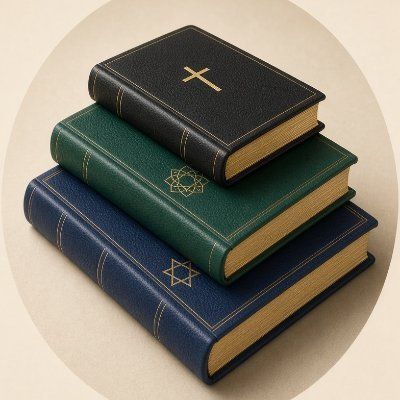 Three Books
Follow
The Torah · The Bible · The Quran
Three books. One search for God.
Every day, people open the Torah, the Bible, and the Quran hoping to know God and to follow Him. Here the three lie open side by side, one story at a time, so you can read what each one says about Him. Come with your own beliefs. Read the texts for yourself, and draw your own conclusions.
How it works
Each book tells of people learning who God is: Abraham and his son, Moses at the edge of the sea, David facing a giant. We read the three tellings together and ask one quiet question: what does this show us about Him?
The Hebrew Bible
We start with the oldest of the three, in the words of the Hebrew scriptures.
The New Testament
Then the New Testament: how it speaks of the same people and what it says about them.
The Quran
Then the Quran's telling: where it agrees and where it differs.
No sides, no debates. Just the texts, quoted exactly, with chapter and verse, so you can see for yourself what each book says about God.
In their own words
“But from thence ye will seek the LORD thy God; and thou shalt find Him, if thou search after Him with all thy heart and with all thy soul.”
Moses to Israel, about returning to God from exile (4:25–31).
“But without faith it is impossible to please him: for he that cometh to God must believe that he is, and that he is a rewarder of them that diligently seek him.”
From the letter's chapter on faith (Hebrews 11).
“And when My servants question thee concerning Me, then surely I am nigh. I answer the prayer of the suppliant when he crieth unto Me. So let them hear My call and let them trust in Me, in order that they may be led aright.”
From the passage on the fast of Ramadan (2:183–187).
Three books, three voices. They don't describe God in the same way, and we won't pretend they do. But each one points its readers toward Him.
Same moment, three books
The stories so far
David & Goliath
The stone does the work. None of the three books gives it the credit.
Noah & the Flood
In Genesis, all three of Noah's sons, Shem, Ham, and Japheth, board the ark. The Quran tells of a son who refused.
Moses & the Red Sea
All three have Israel cross the sea. Only the Quran gives Pharaoh's words as the water closed in.
Abraham
The same test in all three books. Only the Quran leaves the son unnamed.
Cain & Abel
One offering is accepted, one isn't, and the first murder follows. Each book notices something different.
Next
New Shorts and posts go up on YouTube and X. Follow along so you don't miss the next one.
Watch
Tap to play. One story, three books, under sixty seconds.
David vs Goliath in 3 Holy Books: The Sling Isn't the Hero
Noah's Son Said No: The Flood in 3 Holy Books
Pharaoh's Last Words: The Red Sea in 3 Holy Books
About
Picture three old books open on one table: the Torah, the Bible, and the Quran. The people who read them pray in different words and in different places, and they disagree about God in ways that matter. But many who open one of these books are hoping for the same thing: to know God, and to follow Him.
The same names run through all three: Adam, Noah, Abraham, Moses, David. Each book points past those people to God, and each one calls Him the God of Abraham. What they mean by that is where the comparison gets interesting. Most of us only ever hear one book's telling.
Three Books sets them side by side, one story at a time, to learn what each says about Him. We quote each text exactly and give the chapter and verse so you can check it. Where the books agree, we say so. Where they differ, about God or anything else, we say that too.
Three Books takes no side. Whether you read one of these books, all three, or none yet, come as you are, with your own beliefs and your own questions. You're welcome here. Read the texts for yourself and draw your own conclusions. We don't argue for one book over another, and we don't mock anyone's beliefs. Questions and corrections are always welcome.